
What Is Strut Channel? A Complete Guide for Construction and Industrial Support Systems
24 Jun
What Is Strut Channel? A Complete Guide for Construction and Industrial Support Systems
What Is a Strut Channel?
A strut channel is a standardized metal framing component used to build support systems for electrical, mechanical, plumbing, HVAC, solar, and construction installations. It is usually made from cold-formed steel and has a C-shaped or U-shaped profile with inward-facing lips.
The channel works with compatible fittings, spring nuts, bolts, brackets, and clamps to create a strong and adjustable support structure without welding. This makes installation faster, easier to modify, and more cost-effective than traditional welded steel supports.
Strut Channel Sizes and Types
Strut channels are available in different widths, heights, thicknesses, materials, and hole patterns to meet various load requirements and installation conditions. The most common profile is the 41 × 41 mm strut channel, which is widely used for electrical, HVAC, plumbing, construction, and solar support systems.
Common Strut Channel Sizes
| Size | Approximate Imperial Size | Typical Application |
|---|---|---|
| 41 × 21 mm | 1-5/8" × 13/16" | Light-duty cable, conduit, and small pipe supports |
| 41 × 41 mm | 1-5/8" × 1-5/8" | Standard electrical, HVAC, plumbing, and solar supports |
| 41 × 62 mm | 1-5/8" × 2-7/16" | Medium-duty equipment and pipe support systems |
| 41 × 82 mm | 1-5/8" × 3-1/4" | Heavy-duty structural frames and industrial supports |
| Back-to-Back 41 × 41 mm | 1-5/8" × 3-1/4" | High-load pipe racks, seismic bracing, and equipment frames |
Common Material Options
- Pre-galvanized steel: Suitable for indoor and dry environments.
- Hot-dip galvanized steel: Recommended for outdoor, humid, or corrosive environments.
- Stainless steel 304: Suitable for food processing, chemical, and humid environments.
- Stainless steel 316: Recommended for coastal, marine, and highly corrosive environments.
- Aluminum: Lightweight and corrosion-resistant, often used in solar and specialized applications.
Common Thicknesses
Strut channels are commonly produced in thicknesses from 1.5 mm to 3.0 mm, depending on the profile size and required load capacity.
- 1.5–2.0 mm: Light-duty applications
- 2.0–2.5 mm: Standard commercial and industrial applications
- 2.5–3.0 mm: Heavy-duty support systems
Common Channel Types
1. Solid Strut Channel
Solid strut channel has no holes or slots. It is commonly used when maximum strength is required or when hole locations need to be customized during installation.
2. Slotted Strut Channel
Slotted strut channel has elongated slots along the channel body. The slots allow flexible adjustment and faster installation of brackets, clamps, and fittings.
3. Punched Strut Channel
Punched strut channel includes round holes at regular intervals. It is often used for standard mounting applications and electrical support systems.
4. Half-Slotted Strut Channel
Half-slotted strut channel has slots only in selected areas. It provides a balance between strength and installation flexibility.
5. Back-to-Back Strut Channel
Back-to-back strut channel consists of two channels welded or connected together. It provides greater load capacity for heavy-duty structures, pipe racks, and equipment supports.
6. Shallow Strut Channel
Shallow strut channel has a lower profile height, such as 41 × 21 mm. It is suitable for light-duty installations where space is limited.
7. Deep Strut Channel
Deep strut channel has a larger profile height, such as 41 × 62 mm or 41 × 82 mm. It is designed for heavier loads and larger support structures.
When selecting a strut channel, consider the required load capacity, span length, material, corrosion resistance, channel thickness, hole pattern, and compatibility with accessories.

Common Strut Channel Uses
Strut channels are widely used to create flexible support and framing systems without welding. Their modular design allows installers to assemble, adjust, and expand structures quickly using compatible fittings, nuts, bolts, brackets, and clamps.
1. Electrical Installations
- Supporting cable trays and cable ladders
- Mounting electrical conduits
- Building electrical panel frames
- Supporting lighting fixtures and busbar systems
2. HVAC Systems
- Supporting air ducts
- Mounting ventilation equipment
- Suspending fan coil units and air-handling units
- Creating equipment support frames
3. Plumbing and Pipe Support
- Supporting water pipes, drainage pipes, and fire-sprinkler pipes
- Building pipe racks and pipe bridges
- Mounting valves, pumps, and filtration equipment
- Creating adjustable pipe hanger systems
4. Solar Mounting Systems
- Supporting solar panel frames
- Building rooftop and ground-mounted solar structures
- Supporting inverter and battery equipment
- Creating adjustable brackets for photovoltaic installations
5. Construction and Building Services
- Ceiling suspension systems
- Wall-mounted support frames
- Seismic bracing systems
- Raised-floor and equipment-room support structures
6. Industrial and Manufacturing Facilities
- Machine guards and equipment frames
- Conveyor and production-line supports
- Industrial shelving and storage racks
- Safety barriers and maintenance platforms
7. Telecommunications and Data Centers
- Supporting cable management systems
- Mounting network cabinets and communication equipment
- Creating overhead cable support frames
- Supporting cooling and power-distribution equipment
8. Temporary and Custom Structures
- Exhibition stands and display frames
- Workshop benches and tool racks
- Temporary partitions
- Custom brackets and maintenance supports
Strut channels are popular because they provide a strong, adjustable, reusable, and cost-effective alternative to welded steel support structures.

How Strut Channel Products Are Made
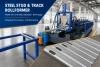
Strut channel products are manufactured through a continuous roll-forming process. In this process, metal coils are gradually shaped into strong and accurate channel profiles for electrical, mechanical, HVAC, plumbing, solar, and construction support systems.
1. Raw Material Selection
The process begins with metal coils. The most common materials are pre-galvanized steel, cold-rolled steel, hot-rolled steel, stainless steel, and aluminum. Material thickness is selected according to the required channel size, load capacity, and corrosion-resistance level.
2. Coil Loading and Decoiling
The steel coil is placed on a decoiler. The decoiler feeds the strip into the production line at a controlled speed. A straightening or leveling unit removes coil curvature and keeps the material flat before forming.
3. Punching to the holes
Before the channel is formed, the flat steel strip passes through a punching unit. The machine creates round holes, elongated slots, or customized hole patterns.
These holes allow installers to connect spring nuts, bolts, brackets, clamps, and other accessories without welding.
4. Roll Forming
The punched strip enters the roll-forming machine. It passes through a series of roller stations that gradually bend the material into the final strut channel profile.
Common profiles include:
- 41 × 21 mm
- 41 × 41 mm
- 41 × 62 mm
- 41 × 82 mm
The roll-forming process creates the channel shape, side walls, and inward-facing lips that hold compatible strut nuts and fittings.
5. Cutting
After roll forming, the finished channel is cut to the required length. Hydraulic cutting systems are commonly used, while servo flying-cut systems are preferred for higher-speed production and improved length accuracy.
Standard lengths are often 3 m, 6 m, 10 ft, or 20 ft. Custom lengths can also be produced according to project requirements.
.webp)


.webp?x-oss-process=image/resize,w_100/quality,q_100)


