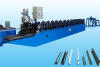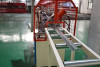


Australia PPGI Color Steel 2 in 1 Apron Flashing Folded Panel Cladding Z -Track Trim Roll Forming Machine
description1
Zipper closure
1/4 zip athletic pullovers for men. Stretchy, lightweight, fast-drying
fabric for superior performance.
REGULAR FIT - US standard sizes. An athletic fit that sits close to the body
for a wide range of motion, designed for optimal performance and all day
comfort.
FEATURES - Quarter zip closure;Thumbholes on long sleeves to keep them in
place during workout
Description
Flashing is a term used to describe a water-resistant material (most often metal) used to reinforce the seams between the different layers of your home’s exterior. Flashing is inexpensive, goes on easily, and can save you—and your home —a ton of moisture-related headaches down the road. There are many different types of flashing. Some can be used in many different locations, while others are intended for very specific applications. Most types of flashing are named either for their appearance (like Z flashing) or for where they are installed (such as valley flashing).
Base flashing can refer to any type of flashing that sits at the base of an opening or penetration. It’s combined with one of the other types of flashing to provide a robust defense. While it may be preformed, it may also start as a plain roll of flashing before being sculpted into a custom form. “Base flashing is simply a piece of metal that has been bent into a specific shape,” says Walker. It’s typically combined with another layer of flashing on top of it. It can redirect water accumulation away from any vulnerabilities in the home’s exterior.
Step flashing is bent at a right angle, like a capital L. It’s used when there’s a 90-degree junction with a roof, such as at the side of a dormer or wall. One side of the step flashing goes up the wall, and the other extends horizontally onto the roof. Step flashing is typically laid out along the roof/wall junction in an overlapping pattern, like roof shingles.
Any type of flashing that sits on other flashing to prevent water penetration is known as counter flashing. For example, picture step flashing sitting at the junction of a chimney and the roof. The side of the step flashing extends upward along the brick face of the chimney. But water can still get into that small gap between the brick and metal flashing. By placing the chimney counter flashing on top of the step flashing, the water is shed away from the chimney and onto the step flashing.
Drip cap flashing is another L-shaped flashing, but is installed over windows and doors. One leg of the “L” goes over the window or door brick mold, while the other lies behind the siding that will go above. Drip cap is put in place after the window or door is installed and before the siding is installed. Some windows and doors that have uni-body or molded frames have their own form of built-in drip cap and don’t require any additional drip cap flashing.
Machine Specification:
|
1
|
Material Thickness
|
thickness 0.3-0.8mm,(Galvanzied coils and Color painted coils)
|
||
|
2
|
Working Speed
|
About 0-12m/min
|
||
|
3
|
Forming Steps
|
About 12 stations
|
||
|
4
|
Material of Roller
|
Gcr15 high grade steel
|
||
|
5
|
Driven system
|
Chain driven
|
||
|
6
|
Main motor power
|
7.5 KW
|
||
|
7
|
Cutting type
|
Hydraulic cutting
|
||
|
8
|
Material of cutting
|
CR12Mov
|
||
|
9
|
Electronic control
|
PLC control
|
||
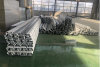
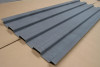
Profile drawing and samples


Application:
Metal trim is a must for most pole barns. It adds protection, dimension and personality to your structure. Eaves and drip flashings are used on overhangs, sides or ends and on roof edges to protect the façade from all weather conditions.
They provide support for shingles and form a roof drip edge that helps direct water into gutters or away from exterior walls.
Our Z and L-Trim corner pieces are used to finish corrugated metal installations — great for wainscoting, custom wall panels, and any application where you need a clean transition from corrugated metal to wall, ceiling, or another surface. Use the trim finish that matches the patina of your Colorado Steel wainscoting or tiles. Z-Trim: Hemmed inside-corner edges or hemmed outside-corner edges. Make sure to select the right corner type for your install.
Other roof trim flashing:
CONTACT US
Related Products