
Metal Building Trends in Costa Rica: Industrial and Commercial Construction Enters a New Phase
27 Aug

Costa Rica’s construction market is showing renewed momentum in 2026, with industrial and commercial development becoming increasingly important. According to recent data from the Costa Rican Chamber of Construction, construction applications for industrial buildings increased significantly during the first part of the year, with industrial warehouses accounting for most of the growth.
This changing market environment is creating new opportunities for metal building systems, steel structures, metal roofing, and related manufacturing technologies.
Industrial Warehouses Drive Demand
One of the most noticeable trends in Costa Rica is the growing demand for industrial warehouses.
During the first four months of 2026, industrial construction applications increased by 69.8% compared with the same period in 2025. Industrial warehouses were responsible for the increase, while applications for factories, production plants, and workshops remained limited. Heredia and Alajuela were particularly important locations for industrial development.
This trend is important for metal building suppliers because warehouses typically require:
- Large clear-span spaces
- Fast construction
- Durable structural systems
- Flexible interior layouts
- Efficient roofing and wall systems
- Easy future expansion
Steel and metal building systems can meet many of these requirements while providing flexibility for different industrial applications.
Why Metal Buildings Are Attractive to Developers
Traditional construction methods can involve multiple stages and large amounts of on-site labor. Metal building systems, in comparison, can move a significant portion of fabrication into a controlled manufacturing environment.
Structural components, roof panels, wall panels, purlins, and other profiles can be manufactured to predefined specifications before being delivered to the construction site.
This approach can help contractors improve production planning and reduce dependence on extensive on-site fabrication.
For warehouses and commercial buildings, the ability to manufacture standardized metal profiles quickly is particularly valuable when projects need predictable construction schedules.
Growing Interest in Flexible Building Design
Modern industrial buildings are no longer designed only for one specific purpose.
A warehouse may later become a distribution center, manufacturing facility, logistics hub, or commercial storage space. As a result, developers increasingly need buildings that can adapt to changing business requirements.
Metal building systems provide opportunities for modular and flexible designs. Steel framing can be combined with different roofing, wall, insulation, ventilation, and interior systems according to project requirements.
This flexibility can be particularly useful in Costa Rica's growing industrial areas, where businesses may need to expand their facilities as operations increase.
The Importance of Metal Roofing
Roofing is another important part of the metal building trend.
Costa Rica's tropical climate creates demanding conditions for building envelopes. High rainfall, humidity, strong sunlight, and seasonal weather require roofing systems to provide reliable protection over long periods.
Metal roofing systems can be designed with different profiles, thicknesses, coatings, and drainage configurations depending on the project.
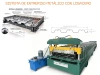
Roll formed roofing panels are particularly suitable for industrial and commercial buildings because manufacturers can produce continuous panels with consistent dimensions and profiles.
Common applications include:
- Industrial warehouses
- Logistics centers
- Commercial buildings
- Agricultural structures
- Workshops
- Storage facilities
Technology Is Becoming Part of the Construction Strategy
The development of metal buildings is also connected to advances in manufacturing technology.
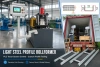
Modern roll forming machines can automatically form roofing panels, wall panels, purlins, studs, tracks, and other metal profiles. Automated cutting and punching systems can further improve production efficiency and dimensional consistency.
For manufacturers serving the Costa Rican market, flexible production equipment can be particularly useful because different construction projects may require different profiles and specifications.
Instead of relying entirely on manual fabrication, manufacturers can establish a more standardized production process.
Sustainability Becomes More Important
Sustainability is also becoming a stronger consideration in Costa Rica's construction sector.
Costa Rica has established long-term goals for low-emission and resilient buildings, including a target that all new buildings should adopt low-emission systems and technologies by 2030.
The country's construction industry has also launched a sustainability roadmap designed to integrate sustainability into design, construction, innovation, and competitiveness.
This creates additional opportunities for efficient metal building systems.
Energy-efficient roofing, insulation, reflective coatings, natural ventilation, daylighting, and solar energy can all be incorporated into modern industrial building designs.
What Comes Next?
Costa Rica's construction market is not growing uniformly across every segment. Recent BCCR data shows that private construction grew 7.7% year over year in the second quarter of 2026, while the non-residential segment declined during the same period. At the same time, industrial construction applications have shown strong growth in several areas.
This suggests that the market is becoming more selective.
For metal building manufacturers, the opportunity may therefore be strongest in specialized applications such as industrial warehouses, logistics facilities, commercial structures, and flexible building systems.
As Costa Rica continues to develop its industrial infrastructure, metal buildings are likely to remain an important solution for projects that require speed, flexibility, durability, and efficient construction.
Conclusion
The future of metal buildings in Costa Rica is being shaped by more than simple demand for steel structures. Industrial development, flexible building requirements, modern manufacturing technology, and sustainability are all influencing how new buildings are designed and constructed.
For contractors, developers, and metal building manufacturers, understanding these trends can help identify new opportunities in the Costa Rican construction market.

Recent Posts

October 26, 2016
The Most Successful Engineering Contractor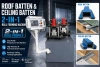
.webp?x-oss-process=image/resize,w_100/quality,q_100)